
The Network Dispatch
Entering the operational era

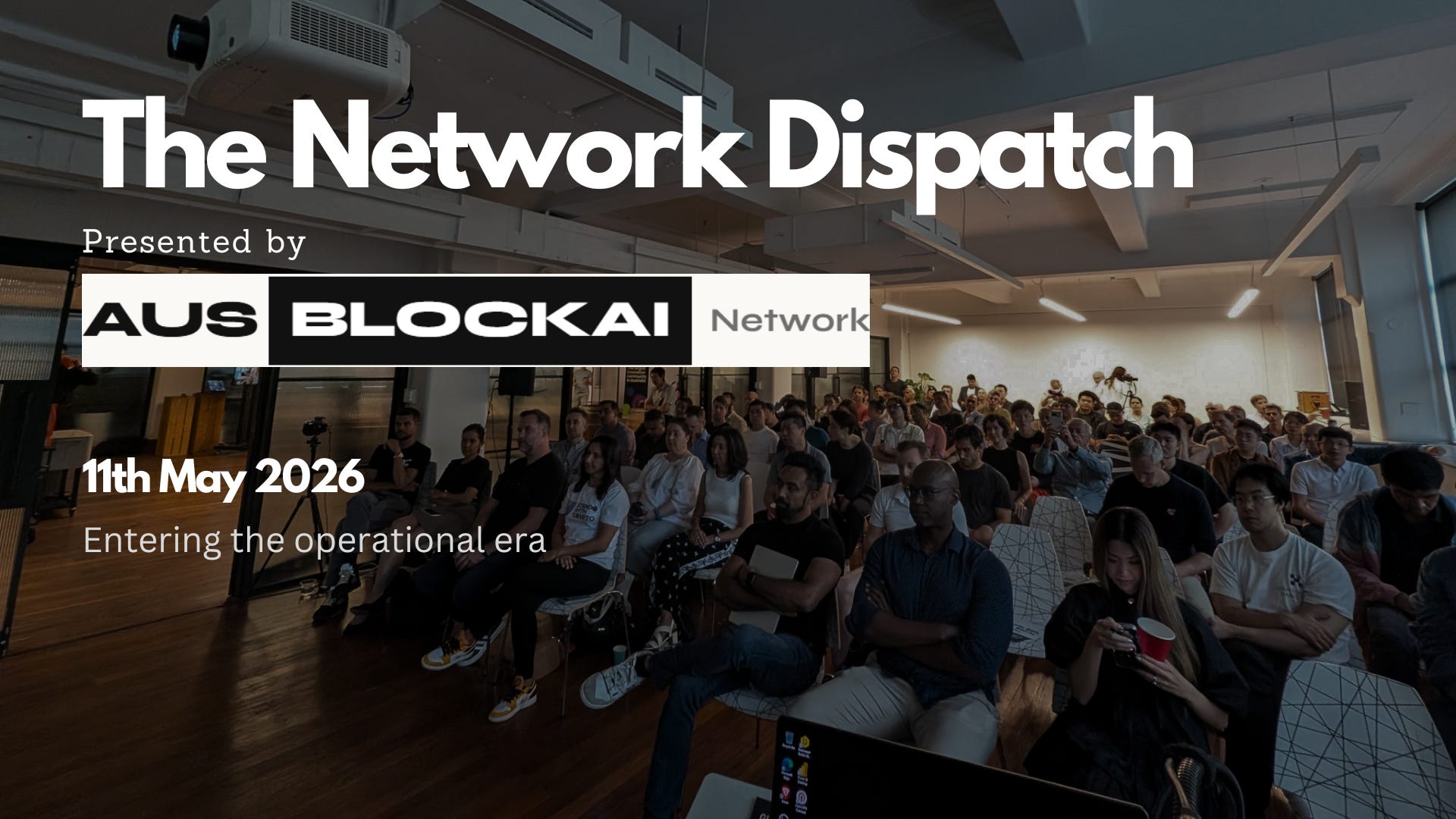
Australia’s digital economy is entering a more operational phase.
For years, much of the discussion around blockchain and AI centred on experimentation, hype cycles, and isolated proof-of-concepts. This week’s developments suggest something more significant is now occurring: the transition from emerging technology discussion into institutional implementation.
On the blockchain side, regulatory clarity is beginning to materialise through the progression of digital asset legislation and the introduction of the VASP regime. While regulation is often framed as friction for innovation, the opposite may prove true. Markets, institutions, and infrastructure providers generally move when operational certainty exists. Australia now appears to be positioning itself for that next phase.
At the same time, the AI conversation is rapidly evolving beyond novelty and productivity gains into deeper questions around workforce adaptation, governance, cyber resilience, and economic structure. The tension is no longer whether AI will reshape industries, but how organisations embed it responsibly while maintaining trust, accountability, and human oversight.
What becomes increasingly clear is that blockchain and AI are no longer separate conversations. One introduces new forms of automation and decision-making capability. The other offers mechanisms for transparency, verification, provenance, and coordination in increasingly autonomous systems.
The intersection between the two may become one of the defining infrastructure themes of the next decade.
For Australia, the opportunity is larger than simply adopting new technologies. It is about whether we can help shape the standards, governance models, and implementation pathways that underpin them.
Before we begin, we also highlight our next meetup for our amazing association is at the end of this month on the 26th May - see you there: https://luma.com/gqqnfgil
You can watch the replay of our latest meetup too here on our YouTube:
BLOCKCHAIN NEWS
This week marks a turning point for Australia’s crypto landscape as pivotal is set into motion, paving the way for a more structured and secure digital asset environment. With regulatory clarity on the horizon, the mood is one of cautious optimism as stakeholders prepare for the changes ahead.
Riding the wave: Australia passes crypto legislation as VASP regime goes live
The Australian Senate has approved the Corporation Amendment (Digital Assets Framework) Bill 2025, integrating crypto exchanges and custodians into the AFSL framework, enhancing transparency and consumer protection. legislation includes exemptions for low-volume platforms under $10 million AUD and transitions to a new VASP regime under AUSTRAC, providing the long-sought regulatory clarity that could significantly boost confidence in Australia’s crypto sector.
Blockchain Bites: One giant leap for crypto - Digital asset legislation heads to parliament
The draft legislation for the Corporations Amendment (Digital Assets Framework) Bill 2025 has progressed to the second reading in Parliament, imposing AFSL requirements on digital asset platforms and tokenised custody under ASIC oversight. With expanded definitions for digital asset custody, this framework aims to regulate a broader spectrum of crypto services, marking a significant advancement in the establishment of a compliant crypto ecosystem in Australia.
Why Australia’s $17B crypto opportunity depends on regulation
Australia is poised to unlock A$24 billion annually from digital assets and tokenized finance, contingent upon the implementation of robust regulatory frameworks The article emphasizes the critical role that clear will play in stimulating economic growth in blockchain sectors, urging policymakers to strike a balance between fostering innovation and ensuring consumer protections amid growing market interest.
Digital Assets 2026: Nine Trends That Shape Web3 – A Legal Practitioner’s View
The article outlines nine key trends expected to shape the Web3 landscape by 2026, including MiCA, CARF/DAC8, and the emergence of tokenisation and DeFi products. These trends are particularly relevant for Australia as they may influence local regulatory frameworks like VASP and AFSL updates, compelling Web3 participants to develop compliance strategies to navigate the evolving landscape effectively.
AI NEWS
This week’s AI news is marked by significant investments in educational technology, rising workplace anxieties, and critical discussions about the economic implications of AI. As Australia grapples with these changes, the narratives reflect both the promise and the peril of AI integration across various sectors.
$4.6M Boost for AI Tool Easing Teacher Workloads
Link: https://www.miragenews.com/4-6m-boost-for-ai-tool-easing-teacher-workloads-1670472/
Western Australia government has announced a $4. million funding extension for the WA ClassmAIte AI pilot program, aimed at reducing teacher workloads by automating lesson planning and resource generation. This initiative underscores Australia’s proactive stance in educational AI adoption and signals a strong commitment to practical applications that can enhance public sector efficiency.
Aussie Workers Seek Wellbeing, Flexibility Amid AI Fears
Link: https://www.miragenews.com/aussie-workers-seek-wellbeing-flexibility-amid-1666444/
A recent survey indicates that 36% of Australian workers are apprehensive about AI potentially replacing essential job functions in the next decade. This growing concern highlights the pressing need for businesses to address employee anxieties and prioritize well-being and flexibility as they navigate the integration of AI technologies.
Will AI bring a jobs crisis or a future of abundance?
Link:
In a discussion led by Alan Kohler, it was revealed that 80% of Australians fear AI’s impact on employment, raising critical questions about whether AI will lead to job losses or create new opportunities. This conversation reflects the urgent need for strategies that mitigate risks while harnessing AI potential to drive growth and innovation.
Australian banks warned frontier AI could create larger, faster cyber attacks
Financial regulators in Australia have issued warnings about the cybersecurity risks associated with frontier AI developments, which could enable more sophisticated and rapid cyber attacks on the financial sector. This highlights the critical need for enhanced security measures as banks adapt to the evolving threat landscape posed by AI technologies.
Adapt or Perish: What AI Disruption Really Means for Business
This analysis discusses the transformative potential of AI for businesses, with predictions that global banks may cut up to 200,000 jobs in the next few years due to AI adoption. It emphasizes the imperative for businesses in Australia to implement effective AI strategies to stay competitive in an increasingly automated economy.
That’s it for this week folks, so in closing out, we’re keeping an eye on how the intertwining of regulatory clarity and AI advancements could reshape our economic landscape. Forward this to someone who needs to be across it and make sure you get along to our latest meetup.
ABOUT AUSTRALIAN BLOCKCHAIN & AI NETWORK
The Australian Blockchain & AI Network (ABAI Network) is a non-profit community organisation dedicated to increasing education and awareness of blockchain technology, specifically blockchain and AI-based projects. Their goal is to empower the Australian community with the knowledge and tools to participate in the digital economy, and to promote the adoption and growth of emerging technology in Australia and beyond.
SPONSORS
This newsletter is brought to you by the following sponsors: